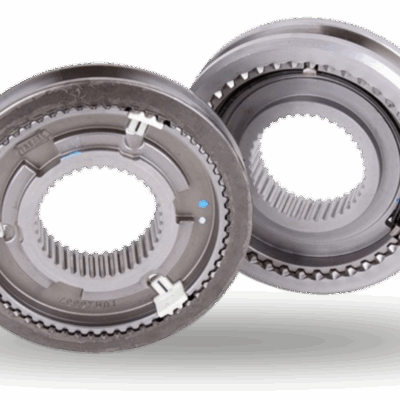
Synchronizers
Synchronizers are essential mechanical components primarily used in manual transmissions and some automatic transmissions to facilitate smooth gear shifting. They work by matching the rotational speed of the gear being selected with the speed of the output shaft before the actual engagement occurs. This synchronization process eliminates the grinding noise and harshness that would otherwise occur when trying to mesh gears at different speeds. A synchronizer typically consists of a hub, sleeve, blocking ring (also called a synchronizer ring or baulk ring), and friction surfaces. When the driver selects a gear, the sleeve moves toward the gear, and the blocking ring first makes contact with the gear’s cone surface, creating friction that gradually equalizes the rotational speeds between the gear and the shaft.
The effectiveness of a synchronizer depends on several factors, including the friction material on the blocking ring, the cone angle, and the speed differential between the gear and shaft. Modern synchronizers often use specialized friction materials like brass or carbon-based compounds to enhance performance and durability. In high-performance applications, multi-cone synchronizers may be employed to handle greater speed differentials and provide faster, more precise shifting. Synchronizers have revolutionized manual transmission design, making gear shifting accessible to average drivers rather than requiring skilled double-clutching techniques. They are also found in some industrial applications where precise speed matching is required during engagement, demonstrating their versatility beyond automotive use.