Helical Gears
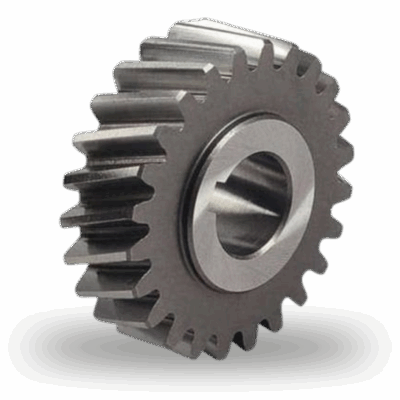
Helical gears are a type of cylindrical gear characterized by their angled teeth that cut into the gear at an angle rather than perpendicular to the axis of rotation. This helical tooth design allows for gradual engagement and disengagement of teeth during operation, resulting in smoother and quieter performance compared to spur gears. The helical angle, which is the angle between the tooth and the gear’s axis, can vary depending on the application requirements, with typical angles ranging from 15 to 30 degrees. This angled tooth configuration also enables helical gears to transmit power between non-parallel shafts, specifically intersecting shafts at various angles, providing greater design flexibility in mechanical systems.
The gradual engagement of helical gears distributes the load more evenly across multiple teeth at any given time, which increases their load-carrying capacity and extends their service life compared to spur gears. However, this design also introduces axial or thrust forces that must be countered with appropriate thrust bearings, adding complexity to the supporting structure. Helical gears can be manufactured as single-helical or double-helical (herringbone) configurations, with the latter eliminating the axial thrust forces by having opposing helix angles on each half of the gear. These gears are commonly used in high-performance applications such as automotive transmissions, industrial machinery, and aerospace systems where smooth operation, high load capacity, and precise motion control are critical requirements.