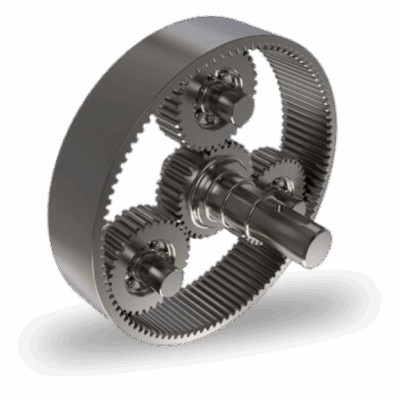
Ring Gears
Ring gears, also known as annular gears or ring gears, are a critical component in many mechanical systems, particularly in automotive drivetrains. These gears feature teeth cut on the inside of a ring, allowing them to mesh with pinion gears located on the inside perimeter. In automotive applications, ring gears are most commonly found as part of the differential in rear-wheel and four-wheel drive vehicles, where they work in conjunction with the pinion gear to transfer power from the driveshaft to the wheels. The size and tooth count of a ring gear directly influence the gear ratio, which affects torque multiplication and rotational speed reduction. Ring gears are typically manufactured from high-strength steel alloys and undergo heat treatment processes to enhance their durability and wear resistance, as they must withstand significant torque loads and impacts during operation.
The design and construction of ring gears can vary depending on the application and performance requirements. In addition to automotive differentials, ring gears are used in industrial machinery, robotics, and various power transmission systems. They can be manufactured as straight-cut or helical designs, with helical ring gears offering smoother operation and higher load capacity due to their angled teeth. The mounting and alignment of ring gears are critical considerations in their installation, as improper alignment can lead to excessive wear, noise, and premature failure. In high-performance applications, ring gears may feature specialized coatings or treatments to reduce friction and improve durability. The integration of ring gears with other components like pinions, bearings, and housing assemblies requires precise engineering to ensure proper meshing, load distribution, and heat dissipation, all of which contribute to the overall efficiency and longevity of the mechanical system.