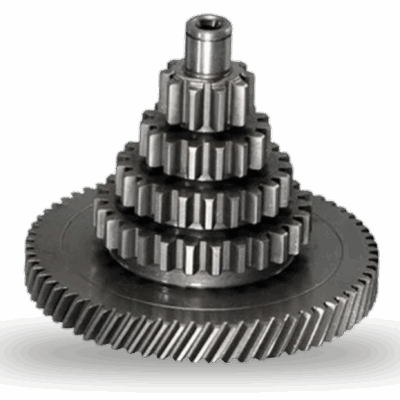
Cluster Gears
Cluster gears, also known as gear clusters or compound gears, are an essential component in many mechanical transmission systems, particularly in manual transmissions. These gears consist of multiple gears of different sizes mounted on a common shaft, allowing them to rotate together while maintaining independent rotational speeds relative to other components. In a typical manual transmission, the cluster gear assembly often includes the main drive gear, first gear, second gear, and sometimes reverse gear, all integrated into a single compact unit. This design saves significant space within the transmission housing while providing the necessary gear ratios for different driving conditions. The cluster gear arrangement enables smooth transitions between gears and helps distribute the transmission’s load across multiple gear teeth, reducing wear and extending the component’s lifespan.
The performance and durability of cluster gears depend on several factors, including the materials used, heat treatment processes, and precision manufacturing. Common materials include case-hardened steel and alloy metals that provide both strength and wear resistance. The gear teeth are precisely cut to ensure proper meshing with other gears in the transmission, minimizing noise and maximizing efficiency. In automotive applications, cluster gears are often bathed in transmission fluid to reduce friction and dissipate heat generated during operation. As with all mechanical components, cluster gears can wear down over time, leading to gear shifting issues, noise, or transmission failure. Regular maintenance, including fluid changes, can help extend the life of these critical components and ensure the smooth operation of the transmission system.